
Table of Contents
A Diplomatic Push at the United Nations
The timing of Trump’s announcement was deliberate. With world leaders gathered in New York, the president sought to seize the moment and present himself as the figure capable of resolving one of the most entrenched conflicts in modern history. “We had a very good meeting in Gaza. It was a very successful meeting with all of the big players except for Israel, but that’s going to be next and I think we can work something out on Gaza,” Trump said after his talks.
His Middle East envoy, Steve Witkoff, expanded on the details, describing the 21-point plan as a blueprint for both immediate relief and long-term stability. According to Witkoff, the proposal includes the release of all captives, a permanent ceasefire, governance of Gaza without Hamas, the deployment of Arab and Muslim forces to secure the territory, and a pledge from Washington that Israel will not annex the occupied West Bank. Trump framed it as a deal that could balance Israeli security concerns with the humanitarian and political demands of Palestinians and their neighbors.
Key Provisions of the Peace Plan
Although full details remain under wraps, leaks from the talks indicate several central pillars. The most controversial is the explicit exclusion of Hamas from any future governing structure in Gaza. Trump and his envoys argue that Hamas has lost legitimacy both regionally and within Palestinian society, citing its dwindling popularity after years of blockade and destruction. The plan envisions a transitional international authority, backed by Arab and Muslim states, to oversee reconstruction and security.
Another cornerstone is the deployment of multinational forces, potentially including troops from Turkey, Egypt, Qatar, and the UAE, to guarantee stability on the ground. This would theoretically allow Israeli forces to withdraw while ensuring that Gaza does not descend into renewed conflict. Alongside this security architecture, the plan calls for a massive financial package to rebuild the Strip, restore basic services, and provide jobs, particularly for the youth who have grown up knowing only siege and war.
Perhaps most striking is Trump’s reported promise that Israel will not annex the West Bank. For Arab leaders long frustrated by settlement expansion and de facto annexation, this assurance offered a rare point of leverage. Yet whether Prime Minister Benjamin Netanyahu will agree to such a constraint remains one of the plan’s biggest uncertainties.
Arab and Muslim Leaders Signal Cautious Support
Initial reactions from regional powers were surprisingly positive. Turkish President Recep Tayyip Erdoğan praised the discussions, while Egyptian President Abdel Fattah el-Sisi expressed support for Trump’s diplomatic push. Qatar, which has long played the role of mediator between Hamas and Israel, also signaled willingness to engage with the plan, though it stressed the importance of an immediate ceasefire and humanitarian relief.
“The main objection of Qatar as a mediator is to stop this war,” said Faisal Abdul Hamid al-Mudaka, editor-in-chief of the Gulf Times. “Whether Hamas is part of the new arrangement or not is up to them. Our priority is to end the suffering, secure the release of hostages, and allow aid into Gaza.”
Yet Arab leaders’ endorsement came with caveats. Many stressed that Israel must be pressured into halting settlement expansion and military aggression, while others warned that the exclusion of Hamas could doom the project before it begins.
Hamas and the Question of Buy-In
The most glaring challenge to Trump’s peace plan is the position of Hamas itself. Despite suffering heavy military losses, the group retains influence in Gaza and has historically rejected any arrangement that sidelines it from governance. Dawoud Kuttab, a Palestinian journalist and analyst, noted that without Hamas’s participation, the plan is unlikely to succeed.
“The missing link in all of this is what Hamas thinks,” Kuttab explained. “There cannot be fighting in one place and rebuilding in another. There has to be an end of the war, and that requires Hamas buy-in. Otherwise, the plan will collapse before it begins.”
Hostages further complicate matters. Trump’s proposal demands the release of all captives before reconstruction starts, but Hamas views hostages as one of its last sources of leverage. Forcing the group to give them up without guarantees of political concessions could prove unrealistic.
Israel’s Reluctance and Netanyahu’s Calculations
Even if Hamas were to soften its stance, Israel remains another formidable obstacle. Prime Minister Netanyahu has spent much of his political career opposing the creation of a Palestinian state and has repeatedly expanded settlements in the West Bank. Analysts question whether he would accept an international authority governing Gaza, let alone foreign troops from Muslim countries deployed on its borders.
“Israelis are not in any mood to agree to a Palestinian state right now,” observed Thomas Warrick, a former U.S. counterterrorism official and senior fellow at the Atlantic Council. “The key is whether Hamas can be removed from governance in Gaza. If that happens, reconstruction can begin, and the prospects for peace may eventually broaden.”
Still, trust remains low. Many Palestinians recall that American-backed negotiations have repeatedly collapsed in the past, often amid Israeli airstrikes or settlement announcements. Convincing the region that Trump’s plan is different will require more than words.
Transitional Governance: A Bosnia-Style Model
Central to the proposal is the idea of transitional governance, modeled loosely on the international authority established in Bosnia after the civil war of the 1990s. Under Trump’s plan, the Palestinian Authority would invite an international body, backed by a one-time United Nations Security Council resolution, to temporarily administer Gaza. The authority would oversee reconstruction, security, and humanitarian aid, while preparing the ground for eventual Palestinian self-rule.
“This would be Bosnia done right,” Warrick argued. “You start reconstruction in areas where Hamas has lost control, even while fighting continues elsewhere. That shows Gazans there is hope for the future, and gradually weakens Hamas’s influence.”
Critics, however, warn that Bosnia’s fragile stability is hardly an inspiring model, and that imposing governance without local legitimacy could deepen resentment.
The Humanitarian Catastrophe
Behind the diplomatic maneuvering lies a humanitarian crisis of staggering proportions. More than 65,000 Palestinians have been killed since the war began, according to figures cited at the UN, with children and women comprising a large share of the casualties. Entire neighborhoods in Gaza lie in ruins, hospitals are overwhelmed, and basic infrastructure has collapsed.
“This is worse than the Holocaust,” al-Mudaka said in a heated exchange. “I don’t know how people can even have the guts to continue talking about bombing Gaza. Journalists, children, entire families have been wiped out. It is a genocide playing out live on television.”
The sheer scale of destruction has added urgency to the search for a settlement. Yet it also raises the stakes: if Trump’s plan fails, it could further erode trust in international diplomacy and deepen despair across the region.
Ceasefire, Security, and the Role of Arab States
Much hinges on the willingness of Arab and Muslim countries to take on a direct role in Gaza’s future. The plan envisions peacekeeping forces drawn from regional states, possibly supplemented by Western allies such as Canada or Australia. U.S. generals would provide leadership, while civilian oversight might fall to an international figure like former British Prime Minister Tony Blair.
But would Arab states truly commit troops to Gaza, especially without Hamas’s consent? Kuttab is skeptical. “No Arab country will send forces into Gaza unless Hamas agrees,” he argued. “Otherwise, they risk being seen not as peacekeepers but as occupiers, dragged into a conflict that is not theirs.”
The question of West Bank annexation further complicates the equation. Trump’s assurance that Israel will not pursue formal annexation may placate some Arab leaders, but many remain unconvinced. “Annexation is already happening on the ground,” Kuttab pointed out. “Settlements expand every day. Unless that stops, no plan will gain credibility.”
The Road Ahead
As Trump prepares to meet Netanyahu in Washington, the future of the 21-point plan hangs in the balance. For now, Arab and Muslim leaders have signaled cautious support, eager to seize any chance of ending the bloodshed. But the absence of Hamas and the skepticism surrounding Netanyahu cast long shadows.
International experts warn that without genuine buy-in from all parties, Trump’s proposal risks becoming yet another in a long line of failed peace initiatives. Still, some see hope in the mere fact that regional leaders are engaging seriously with the plan. If nothing else, it reflects a shared recognition that the status quo—perpetual war, blockade, and humanitarian collapse—is untenable.
Whether Trump’s 21-point vision can bridge the divide between Israel and Hamas, deliver relief to Gaza’s civilians, and revive the dream of a two-state solution remains uncertain. For the people of Gaza, however, the urgency is clear: every day without peace brings more death, more destruction, and fewer reasons to believe in a better fTrump’s 21-Point Gaza Peace Plan Faces Scrutiny Amid War’s Human Toll
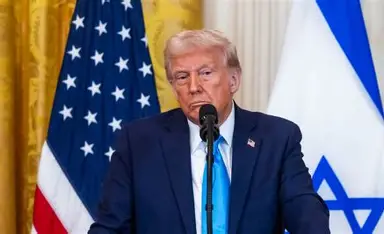
As Israel’s war on Gaza enters its third year, with tens of thousands of Palestinians killed and millions displaced, United States President Donald Trump has put forward what he calls a comprehensive solution: a 21-point peace plan aimed at ending the conflict, rebuilding the Gaza Strip, and reshaping the region’s political landscape. Unveiled on the sidelines of the 80th United Nations General Assembly in New York, the proposal immediately drew global attention. Trump met with leaders from eight Arab and Muslim countries, including Turkey, Egypt, Qatar, Saudi Arabia, Jordan, and the United Arab Emirates, securing what he described as strong backing for his initiative. Yet the plan’s success hinges on two actors not present in the room—Israel and Hamas—both of whom must buy into the proposal if it is to become more than another diplomatic footnote.
A Diplomatic Push at the United Nations
The timing of Trump’s announcement was deliberate. With world leaders gathered in New York, the president sought to seize the moment and present himself as the figure capable of resolving one of the most entrenched conflicts in modern history. “We had a very good meeting in Gaza. It was a very successful meeting with all of the big players except for Israel, but that’s going to be next and I think we can work something out on Gaza,” Trump said after his talks.
His Middle East envoy, Steve Witkoff, expanded on the details, describing the 21-point plan as a blueprint for both immediate relief and long-term stability. According to Witkoff, the proposal includes the release of all captives, a permanent ceasefire, governance of Gaza without Hamas, the deployment of Arab and Muslim forces to secure the territory, and a pledge from Washington that Israel will not annex the occupied West Bank. Trump framed it as a deal that could balance Israeli security concerns with the humanitarian and political demands of Palestinians and their neighbors.
Key Provisions of the Peace Plan
Although full details remain under wraps, leaks from the talks indicate several central pillars. The most controversial is the explicit exclusion of Hamas from any future governing structure in Gaza. Trump and his envoys argue that Hamas has lost legitimacy both regionally and within Palestinian society, citing its dwindling popularity after years of blockade and destruction. The plan envisions a transitional international authority, backed by Arab and Muslim states, to oversee reconstruction and security.
Another cornerstone is the deployment of multinational forces, potentially including troops from Turkey, Egypt, Qatar, and the UAE—to guarantee stability on the ground. This would theoretically allow Israeli forces to withdraw while ensuring that Gaza does not descend into renewed conflict. Alongside this security architecture, the plan calls for a massive financial package to rebuild the Strip, restore basic services, and provide jobs, particularly for the youth who have grown up knowing only siege and war.
Perhaps most striking is Trump’s reported promise that Israel will not annex the West Bank. For Arab leaders long frustrated by settlement expansion and de facto annexation, this assurance offered a rare point of leverage. Yet whether Prime Minister Benjamin Netanyahu will agree to such a constraint remains one of the plan’s biggest uncertainties.
Arab and Muslim Leaders Signal Cautious Support
Initial reactions from regional powers were surprisingly positive. Turkish President Recep Tayyip Erdoğan praised the discussions, while Egyptian President Abdel Fattah el-Sisi expressed support for Trump’s diplomatic push. Qatar, which has long played the role of mediator between Hamas and Israel, also signaled willingness to engage with the plan, though it stressed the importance of an immediate ceasefire and humanitarian relief.
“The main objection of Qatar as a mediator is to stop this war,” said Faisal Abdul Hamid al-Mudaka, editor-in-chief of the Gulf Times. “Whether Hamas is part of the new arrangement or not is up to them. Our priority is to end the suffering, secure the release of hostages, and allow aid into Gaza.”
Yet Arab leaders’ endorsement came with caveats. Many stressed that Israel must be pressured into halting settlement expansion and military aggression, while others warned that the exclusion of Hamas could doom the project before it begins.
Hamas and the Question of Buy-In
The most glaring challenge to Trump’s peace plan is the position of Hamas itself. Despite suffering heavy military losses, the group retains influence in Gaza and has historically rejected any arrangement that sidelines it from governance. Dawoud Kuttab, a Palestinian journalist and analyst, noted that without Hamas’s participation, the plan is unlikely to succeed.
“The missing link in all of this is what Hamas thinks,” Kuttab explained. “There cannot be fighting in one place and rebuilding in another. There has to be an end of the war, and that requires Hamas buy-in. Otherwise, the plan will collapse before it begins.”
Hostages further complicate matters. Trump’s proposal demands the release of all captives before reconstruction starts, but Hamas views hostages as one of its last sources of leverage. Forcing the group to give them up without guarantees of political concessions could prove unrealistic.
Israel’s Reluctance and Netanyahu’s Calculations
Even if Hamas were to soften its stance, Israel remains another formidable obstacle. Prime Minister Netanyahu has spent much of his political career opposing the creation of a Palestinian state and has repeatedly expanded settlements in the West Bank. Analysts question whether he would accept an international authority governing Gaza, let alone foreign troops from Muslim countries deployed on its borders.
“Israelis are not in any mood to agree to a Palestinian state right now,” observed Thomas Warrick, a former U.S. counterterrorism official and senior fellow at the Atlantic Council. “The key is whether Hamas can be removed from governance in Gaza. If that happens, reconstruction can begin, and the prospects for peace may eventually broaden.”
Still, trust remains low. Many Palestinians recall that American-backed negotiations have repeatedly collapsed in the past, often amid Israeli airstrikes or settlement announcements. Convincing the region that Trump’s plan is different will require more than words.
Transitional Governance: A Bosnia-Style Model
Central to the proposal is the idea of transitional governance, modeled loosely on the international authority established in Bosnia after the civil war of the 1990s. Under Trump’s plan, the Palestinian Authority would invite an international body—backed by a one-time United Nations Security Council resolution—to temporarily administer Gaza. The authority would oversee reconstruction, security, and humanitarian aid, while preparing the ground for eventual Palestinian self-rule.
“This would be Bosnia done right,” Warrick argued. “You start reconstruction in areas where Hamas has lost control, even while fighting continues elsewhere. That shows Gazans there is hope for the future, and gradually weakens Hamas’s influence.”
Critics, however, warn that Bosnia’s fragile stability is hardly an inspiring model, and that imposing governance without local legitimacy could deepen resentment.
The Humanitarian Catastrophe
Behind the diplomatic maneuvering lies a humanitarian crisis of staggering proportions. More than 65,000 Palestinians have been killed since the war began, according to figures cited at the UN, with children and women comprising a large share of the casualties. Entire neighborhoods in Gaza lie in ruins, hospitals are overwhelmed, and basic infrastructure has collapsed.
“This is worse than the Holocaust,” al-Mudaka said in a heated exchange. “I don’t know how people can even have the guts to continue talking about bombing Gaza. Journalists, children, entire families have been wiped out. It is a genocide playing out live on television.”
The sheer scale of destruction has added urgency to the search for a settlement. Yet it also raises the stakes: if Trump’s plan fails, it could further erode trust in international diplomacy and deepen despair across the region.
Ceasefire, Security, and the Role of Arab States
Much hinges on the willingness of Arab and Muslim countries to take on a direct role in Gaza’s future. The plan envisions peacekeeping forces drawn from regional states, possibly supplemented by Western allies such as Canada or Australia. U.S. generals would provide leadership, while civilian oversight might fall to an international figure like former British Prime Minister Tony Blair.
But would Arab states truly commit troops to Gaza, especially without Hamas’s consent? Kuttab is skeptical. “No Arab country will send forces into Gaza unless Hamas agrees,” he argued. “Otherwise, they risk being seen not as peacekeepers but as occupiers, dragged into a conflict that is not theirs.”
The question of West Bank annexation further complicates the equation. Trump’s assurance that Israel will not pursue formal annexation may placate some Arab leaders, but many remain unconvinced. “Annexation is already happening on the ground,” Kuttab pointed out. “Settlements expand every day. Unless that stops, no plan will gain credibility.”
The Road Ahead
As Trump prepares to meet Netanyahu in Washington, the future of the 21-point plan hangs in the balance. For now, Arab and Muslim leaders have signaled cautious support, eager to seize any chance of ending the bloodshed. But the absence of Hamas and the skepticism surrounding Netanyahu cast long shadows.
International experts warn that without genuine buy-in from all parties, Trump’s proposal risks becoming yet another in a long line of failed peace initiatives. Still, some see hope in the mere fact that regional leaders are engaging seriously with the plan. If nothing else, it reflects a shared recognition that the status quo, perpetual war, blockade, and humanitarian collapse, is untenable.
Whether Trump’s 21-point vision can bridge the divide between Israel and Hamas, deliver relief to Gaza’s civilians, and revive the dream of a two-state solution remains uncertain. For the people of Gaza, however, the urgency is clear: every day without peace brings more death, more destruction, and fewer reasons to believe in a better future.


