Usanewstrend.com | Breaking News | May 30, 2026 | US Military | Indo-Pacific | China | Defense Policy
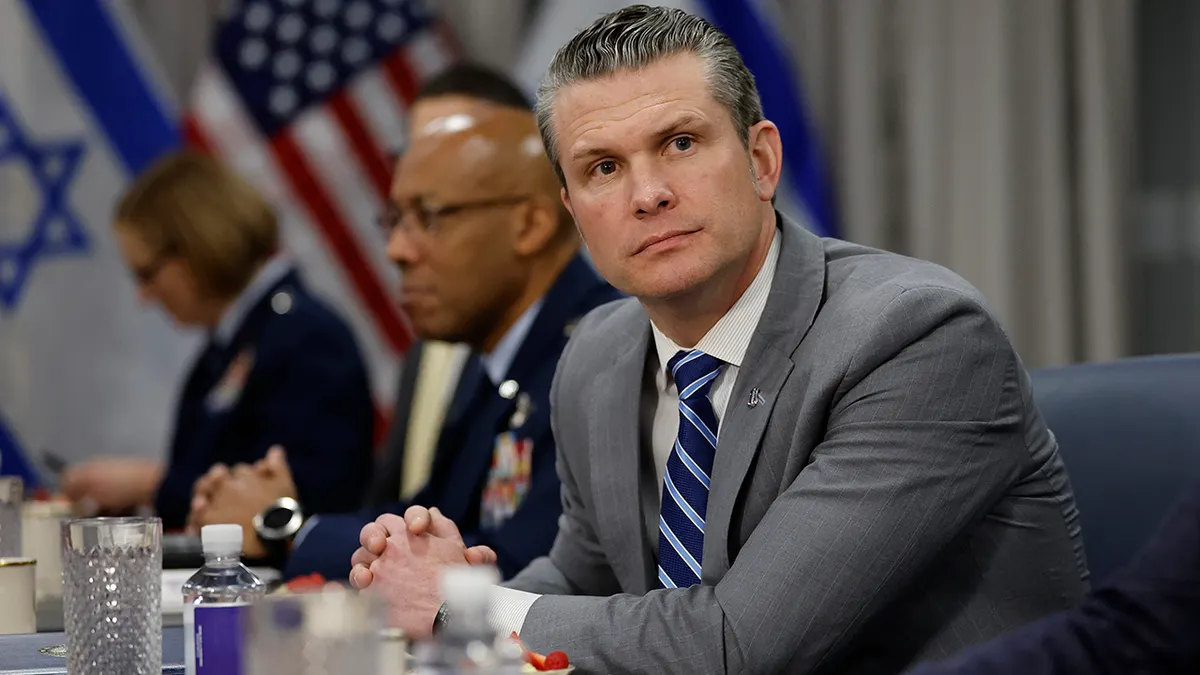
U.S. Defense Secretary Pete Hegseth stood before Asia’s most powerful gathering of defense officials in Singapore on Saturday morning and delivered a direct message: American military power is the foundation of stability in the Indo-Pacific, China’s military expansion is alarming its neighbors, and the United States will not step back from its commitments in the region regardless of the diplomatic reset that Trump and Xi Jinping agreed to earlier this month. The keynote address at the 23rd Shangri-La Dialogue laid out an American defense posture that simultaneously seeks stable relations with Beijing and makes clear that the U.S. military presence in the region is not a bargaining chip.
Hegseth described U.S.-China relations as better than they have been in many years, a framing that implicitly credits the Trump administration’s approach for the improvement. He said Trump seeks stable peace, fair trade, and respectful relations with China. But he balanced those reassuring words with a pointed warning that was directed at Asian allies as much as at China: the United States has alarm in the Asia Pacific region by China’s historic military build-up and the expansion of its military activities. That alarm, he suggested, is justified, and the United States shares it.
China’s decision to skip the summit at the defense minister level gave Hegseth an uncontested platform. Defense Minister Dong Jun’s absence, repeating the pattern from the 2025 Shangri-La Dialogue, removed the possibility of a face-to-face exchange that Chinese representatives could use to rebut American characterizations of Chinese military behavior. The United States walked away from the forum’s formal sessions with its narrative uncontested. Whether that represents a Chinese strategic miscalculation or a deliberate decision to signal that Beijing does not accept the forum’s framing is being actively debated among regional analysts.
The summit’s security discussions ranged well beyond the immediate U.S.-China competition. The Middle East ceasefire negotiations and the ongoing Strait of Hormuz disruption have direct consequences for Indo-Pacific economies that depend on Middle Eastern energy imports. Japan, which imports virtually all of its oil and gas, has been among the economies most severely impacted by the energy price surge. South Korea, Taiwan, and Southeast Asian nations have all absorbed significant inflationary pressure from the disruption. Hegseth’s statement that the United States will work to ensure the free flow of energy through the Strait of Hormuz was therefore received as relevant to Indo-Pacific economic security, not just Middle Eastern politics.
Russia’s war on Ukraine also featured prominently, reflecting the degree to which the global security environment has fragmented into simultaneous crises that strain the attention and resources of every major power. For Indo-Pacific nations that view the rules-based international order as essential to their security, the outcome in Ukraine matters to the precedent it sets about the viability of military conquest. Hegseth reaffirmed American commitment to Ukraine’s defense, though the administration’s definition of that commitment has evolved considerably from the posture of its predecessor.
The bilateral meetings running alongside the formal Shangri-La sessions produced several noteworthy developments. Japan and New Zealand advanced discussions on a potential Mogami-class frigate sale that would represent a significant step in Tokyo’s expanding defense industrial partnerships with like-minded nations. Australia and the United States reviewed AUKUS delivery timelines. The Philippines, which has faced aggressive Chinese coast guard behavior in the South China Sea throughout 2026, pressed Hegseth for clearer commitments on American operational support in the event of a confrontation.
For the 600 delegates from more than 50 nations attending the Shangri-La Dialogue, Hegseth’s address represented the most comprehensive public statement of American Indo-Pacific defense policy since the Trump-Xi Beijing summit earlier this month. That summit reset the diplomatic temperature between the two powers but left significant strategic ambiguity about what specifically the United States would and would not accept in terms of Chinese military behavior. The Singapore speech began filling in that ambiguity, though key questions, particularly around Taiwan, remain carefully underdefined.
The U.S. defense industrial base and its ability to sustain simultaneous commitments across the Indo-Pacific, the Middle East, and Europe is a recurring concern at forums like this one. Hegseth addressed it directly, arguing that the administration’s defense spending increases and its focus on manufacturing American weapons in American factories are rebuilding the industrial capacity needed to fulfill these commitments sustainably. Critics, including some allied defense officials speaking on background, questioned whether the pace of industrial rebuilding matches the speed at which Chinese military capabilities are advancing.
Read More: Brent Crude Hits $116 as Strait of Hormuz Closure Threatens US Energy Security and Pushes Gas Prices Above $4 Nationally
Singapore’s role hosting this forum reflects its unique position as perhaps the only nation in the world that maintains genuine credibility with both the United States and China while clearly articulating its own independent perspective. Defense Minister Chan Chun Sing’s observation that the world is in a period when weeks where decades happen applies as accurately to Singapore’s own strategic environment as to any other nation in the room. Small states navigating between superpowers in a period of accelerating great power competition need forums like Shangri-La precisely because they offer the rare combination of candid strategic exchange, relationship-building, and signaling that formal diplomatic channels do not readily provide.
When the 23rd Shangri-La Dialogue closes Sunday, its outcomes will be evaluated not on the speeches delivered but on the decisions made in bilateral meetings, the signals interpreted by intelligence services across the region, and the degree to which the conversations in Singapore shape the calculus of political and military leaders who must make consequential choices about deterrence, alliance management, and force posture in the months ahead. By that measure, Hegseth’s presence and his clear message to allies and adversaries alike may prove to be one of the most consequential American diplomatic moments of this complicated year.