
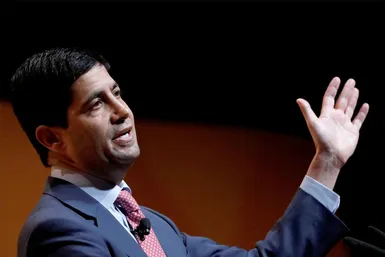
The United States Federal Reserve has entered one of the most challenging periods in its history under newly confirmed Chairman Kevin Warsh, who takes over at a moment when conflicting economic signals have made the central bank’s core mission controlling inflation while supporting growth exceptionally difficult to execute. The Senate confirmed Warsh as the next Fed chair in a vote that reflected sharp partisan division, with Democrats warning that his known preference for tighter monetary policy could trigger an unnecessary recession and Republicans arguing that the Biden-era Fed’s prolonged low-rate posture embedded the inflation that households are still fighting today.
Consumer price inflation in the United States remains stubbornly above the Fed’s two percent target, driven by a combination of global energy price increases linked to the Iran-US military confrontation, continued supply chain pressures from elevated shipping costs, and domestic labor market tightness that is pushing wages higher in key sectors. US News reported this month that consumers “remain resilient in the face of the highest inflation since 2023,” a characterization that captures both the economy’s underlying strength and the pain that higher prices continue to impose on working families.
Warsh inherits a Fed that spent years raising interest rates aggressively to fight post-pandemic inflation and then began cautiously cutting rates as price pressures appeared to ease through late 2024 and early 2025. The rate-cutting cycle has now stalled as energy prices climb again, creating a scenario in which the Fed may need to hold rates higher for longer than markets expected, inflicting additional pain on mortgage borrowers, small businesses carrying variable-rate debt, and emerging markets that borrowed heavily in US dollars during the low-rate era.
The Trump administration’s immigration enforcement surge is creating additional economic complications for the Fed. The removal of more than 2.5 million people from the US labor force and the chilling effect on new arrivals has tightened labor supply in agriculture, construction, and food service sectors that already face structural worker shortages. Tighter labor supply pushes wages higher and ultimately feeds into consumer prices, potentially counteracting the Fed’s efforts to bring inflation down. Warsh has acknowledged the complexity but has not publicly committed to a specific rate path.
High interest rates also create direct fiscal pressure on the federal government itself. The US national debt has surpassed $37 trillion, and the interest payments on that debt now consume a larger share of the federal budget than at any point since the early 1990s. As existing debt rolls over into new instruments at higher rates, interest costs will continue to rise even if the Fed begins cutting rates modestly. The Congressional Budget Office has warned that without significant fiscal adjustment, interest payments could consume 20 percent of federal revenues within a decade.
The House passed a budget outline this month that includes $70 billion in new immigration enforcement funding but does not include meaningful deficit reduction measures. Democrats unanimously opposed the measure, while some Republican fiscal hawks expressed private reservations about adding to the deficit, though they ultimately voted with their party. The gap between the administration’s spending priorities and any realistic path to fiscal sustainability creates the backdrop against which Warsh must conduct monetary policy.
Read More: America’s AI Dominance at Stake as OpenAI Raises $122 Billion, Google Expands Globally and China Blocks Meta’s AI Acquisition
Global central banks are watching Washington closely. The European Central Bank, Bank of Japan, and Bank of England are all navigating their own versions of the inflation-versus-growth dilemma, shaped by the same global energy price pressures and the knock-on effects of US dollar strength that results from elevated American interest rates. A coordinated global central bank approach to current conditions has so far proven impossible to organize, leaving each institution to manage its own economy’s peculiarities as best it can.
For American households, the near-term outlook is a period of continued financial pressure accompanied by political polarization about who is responsible and what should be done about it. The Federal Reserve, by design, is insulated from that political fight, but Warsh’s every public statement will be scrutinized for signals about the rate path that affects every mortgage, business loan, and savings account in the country.


