
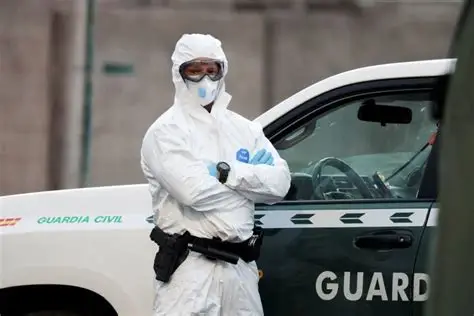
Dozens of American passengers are returning home this week after weeks stranded aboard a Dutch-flagged cruise ship that became the center of a frightening hantavirus outbreak, one of the most unusual public health emergencies to unfold on international waters in recent years. The ship reached Spain’s Canary Islands on Sunday morning, completing a tense journey that left passengers and public health officials scrambling to manage an outbreak caused by a virus rarely associated with person-to-person transmission.
Most of the American passengers aboard are heading to Nebraska, where health officials have set up specialized evaluation facilities to assess their condition and monitor them for potential symptoms. Hantavirus is typically transmitted through contact with infected rodents or their droppings rather than between people, making the mechanics of an outbreak aboard a closed ship vessel a subject of intense interest to epidemiologists and infectious disease researchers.
Public health authorities have not yet identified the exact source of the outbreak or explained precisely how multiple passengers came into contact with the pathogen in a controlled shipboard environment. The investigation is ongoing, and federal health agencies are coordinating with their Spanish and Dutch counterparts to understand the full chain of transmission.
The incident follows a troubling pattern of unusual health events occurring in contained environments, from cruise ships to research stations, that have heightened public awareness of zoonotic disease risks since the COVID-19 pandemic. Governments that once paid little attention to obscure rodent-borne viruses are now tracking hantavirus and similar pathogens much more closely, aware that international travel can rapidly transform a localized wildlife health issue into an international public health concern.
For the cruise industry, the outbreak is another unwanted headline in a sector that spent years rebuilding public confidence after the pandemic. Cruise companies, port authorities, and health agencies are expected to review biosecurity protocols aboard ships in the wake of this incident. Questions about ventilation systems, food storage, and onboard pest control will feature prominently in those reviews.
Read More: United States Economy Adds 115,000 Jobs in April as Iran War Strains Labor Market and Energy Costs Spike
The broader implications for international travel health policy are significant. The incident has already triggered calls from some public health advocates for mandatory reporting of unusual disease clusters aboard international vessels and a clearer international protocol for managing passengers when a ship becomes the site of an outbreak. Current international health regulations cover some of these scenarios but leave gaps that this incident exposed clearly.
Passengers who spent weeks isolated aboard the ship described the experience as deeply stressful, with limited information from ship management, uncertainty about whether they would be evacuated, and anxiety about their own health status. Several described sleeping in shared areas with passengers who were visibly unwell. Lawyers representing some passengers have indicated they are exploring potential legal action against the cruise operator.


